

Beef Liver: What's Actually In It, and Why We Stopped Eating It
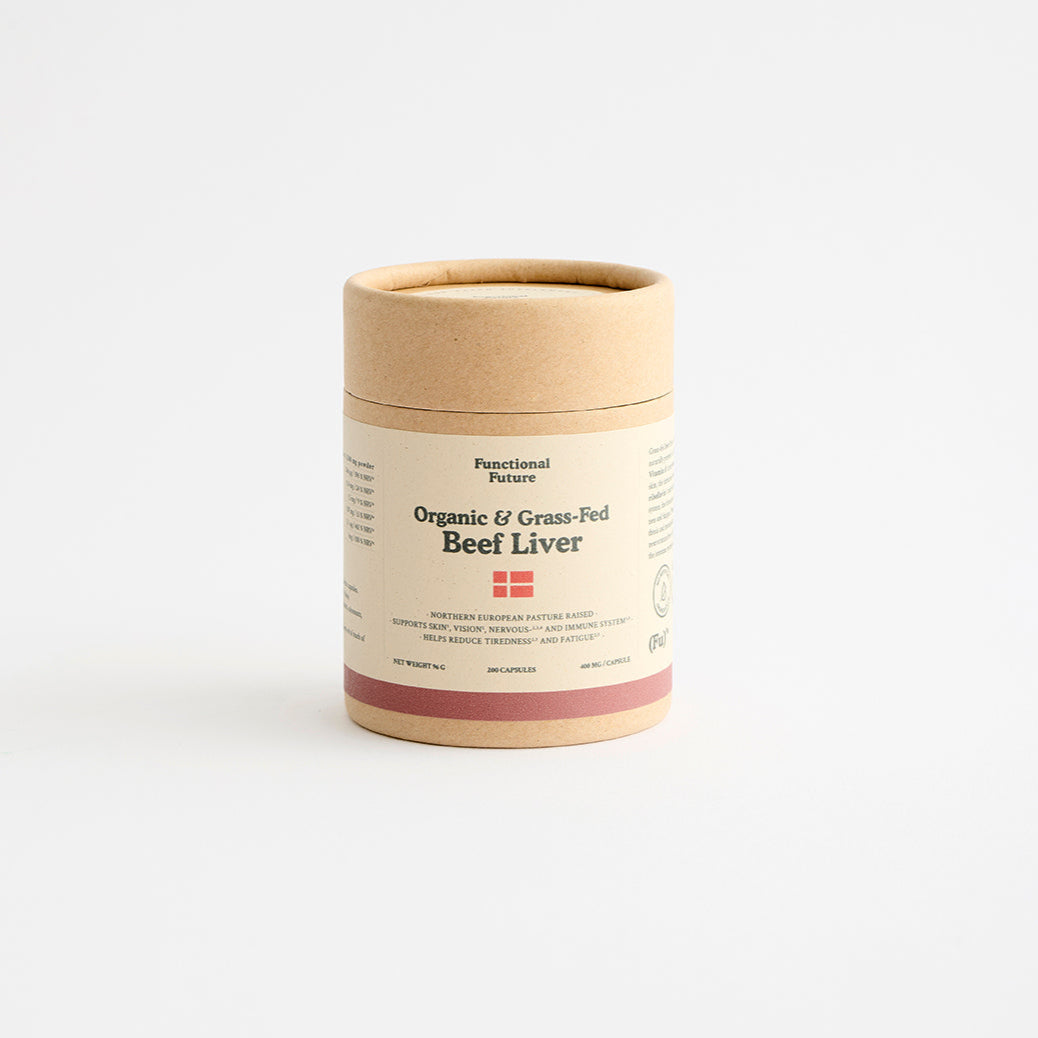
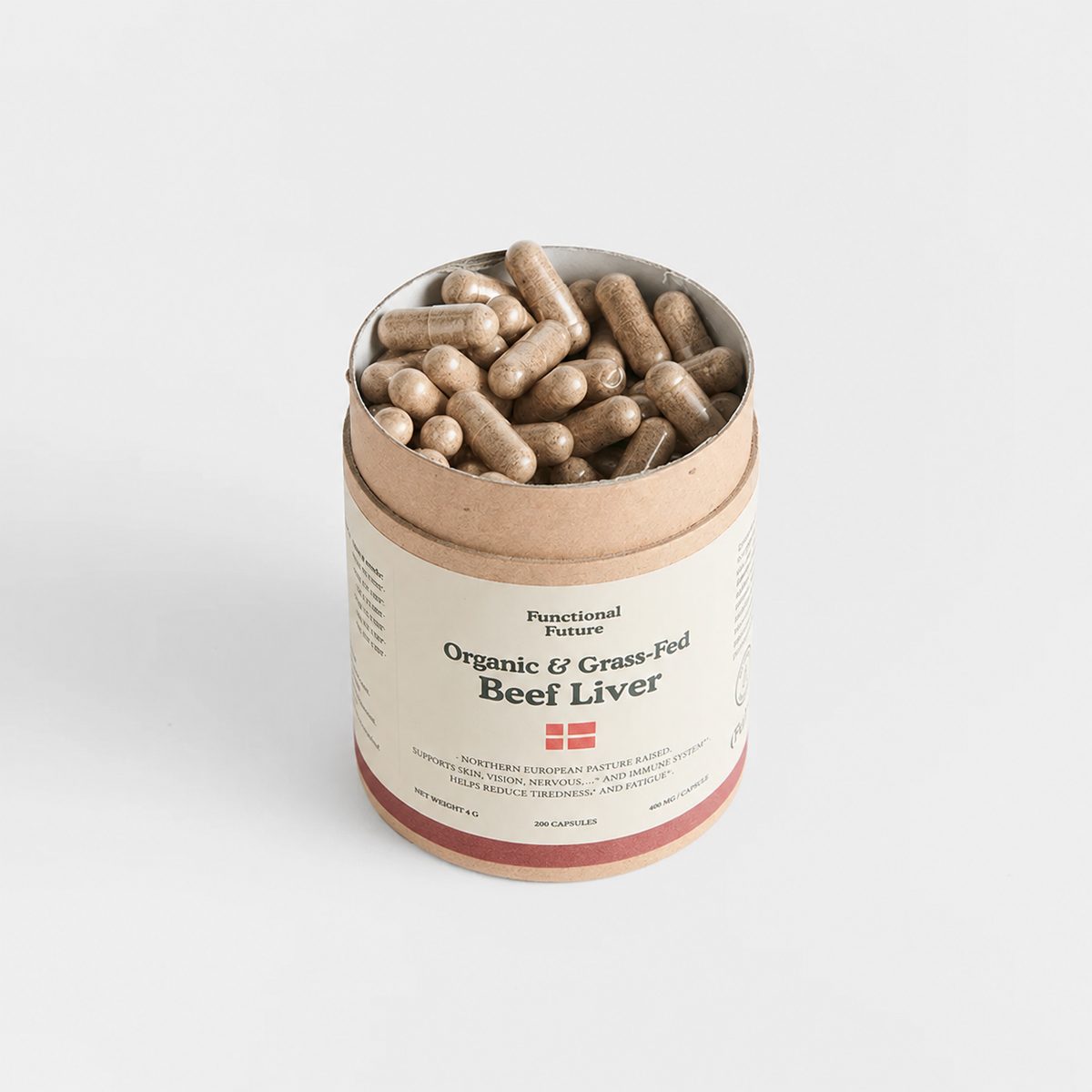
Learn more about the product - Organic Beef Liver
Beef liver was a weekly meal in most British households two generations ago. Today, most people meet it as a capsule, if they meet it at all. Its decline had almost nothing to do with nutrition.
This is what beef liver actually contains, why it fell out of favour, and how we make our organic beef liver capsules.
What's actually in beef liver
Beef liver is a naturally concentrated food. Where a muscle cut is largely protein, liver stores the nutrients the animal needed to function, which is why the same volume carries a very different nutritional profile.
The nutrients present in the highest concentrations are:
- Vitamin A, in the preformed retinol form. Liver is among the richest natural food sources.
- Vitamin B12
- Iron, in haem form
- Folate
- Copper
- Riboflavin and selenium
Nutrients arrive together in food
In a supplement aisle, nutrients are sold one at a time: vitamin A for vision, B12 for energy, iron in its own bottle. In food, they arrive as a group.
Liver is a clear example. Vitamin A occurs alongside copper. Iron occurs alongside folate and B vitamins. Research on whole dietary patterns has repeatedly found that nutrients are absorbed and used differently depending on what accompanies them, which is one reason nutrition science has moved from studying single compounds towards studying whole foods.
That is a statement about how food works, not a promise about what a capsule will do. We think it is the more interesting starting point anyway.
Why liver disappeared from British plates
Liver was standard household food in Britain well into the twentieth century. It was cheap, it kept badly so it was eaten fresh, and it was treated as ordinary rather than remarkable.
What changed was prosperity, not evidence. When rationing ended in 1954, choice became the marker of a better standard of living, and choice meant muscle cuts. Steak was marketed as refined. Offal became shorthand for making do. By the 1980s liver carried a stigma that had nothing to do with what was in it: too strong, too old-fashioned, too much trouble.
Across other cultures, the opposite held. Liver was often the most prized part of the animal, given first, shared as a sign of care, and eaten fresh straight after a hunt. The taste was read as a sign of density rather than a defect.
Nose to tail, and why it came back
Interest in liver returned through three separate doors at once: sustainability, because eating the whole animal wastes less; cooking, because chefs put offal back on menus; and nose-to-tail nutrition, which treats organ meats as food rather than as a supplement category.
Capsules are the least romantic version of this, and for most people the most realistic one. Freeze-dried liver has no taste, needs no preparation, and does not require you to like liver.
How we make our organic beef liver capsules
- Organic certified, not only grass-fed. Very few organ supplements on the UK market carry organic certification.
- Grass-fed Nordic cattle, raised on pasture.
- Freeze-dried at low temperature, so the nutrient matrix stays intact rather than being heat-treated.
- No fillers, no flow agents, no anti-caking agents. The capsule contains liver.
- Independently third-party tested for heavy metals using ICP-MS.
Read more
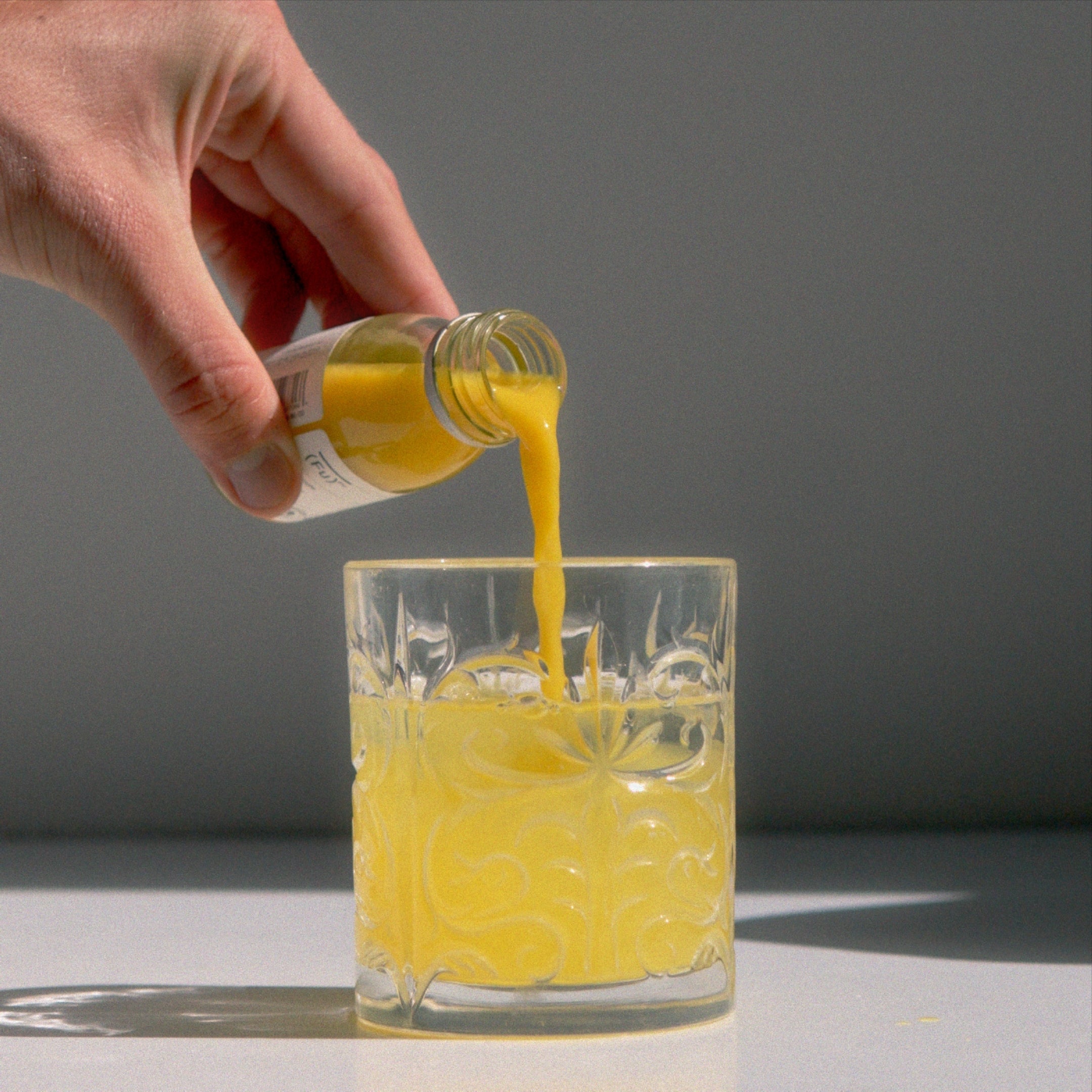
True energy begins in stillness. As the body restores balance, ginger supports clarity and resilience through its natural antioxidant and anti-inflammatory properties.
Wellness is built through small, intentional upgrades. A spoonful of seeds, a ginger shot, or a scoop of collagen are simple, repeatable choices that fit into daily life and quietly build balance, ...